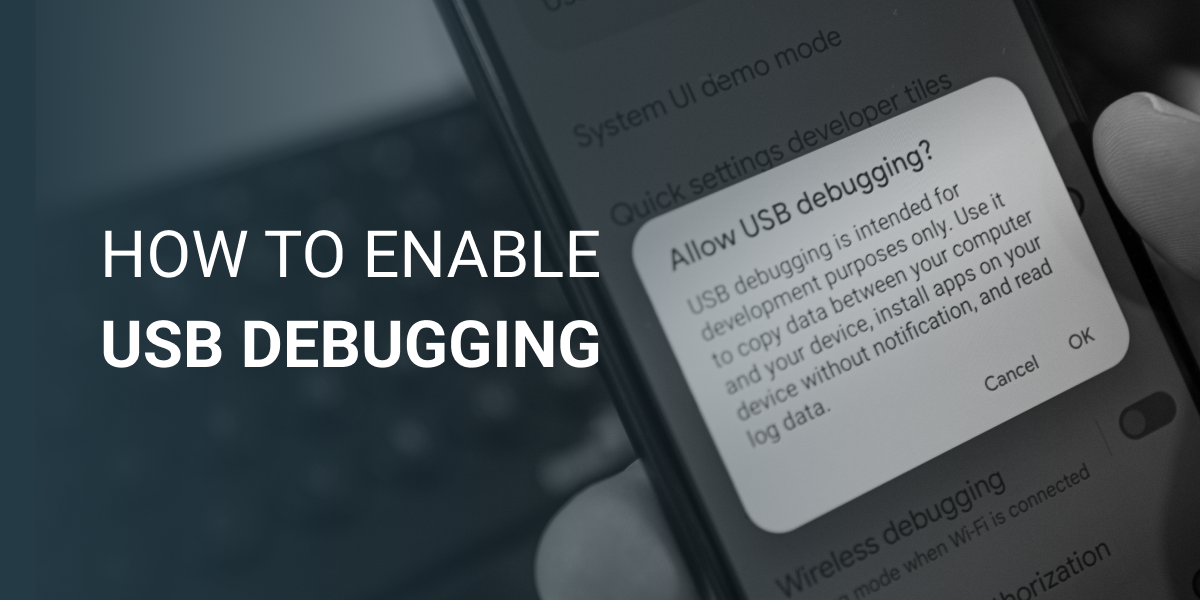
USB debugging is an Android developer setting that allows a device to communicate with a computer through Android Debug Bridge (ADB). It is used for development, diagnostics, troubleshooting, application installation, and automated testing.
For businesses processing used Android phones, USB debugging can also support device preparation before diagnostics. At higher volumes, reducing the manual steps required to activate debugging can make the testing workflow more consistent.
What Is USB Debugging on Android?
USB debugging on Android is a Developer Options setting that allows an Android device to communicate with a computer through ADB. Once the setting is enabled and the computer is authorized, compatible software can send commands to the device.
Despite the name, USB debugging is not limited to finding software bugs. It can support device configuration, application testing, troubleshooting, diagnostics, and other technical operations.
Enabling USB debugging does not root an Android phone. Root access is a separate process that provides elevated system privileges.
What Does USB Debugging Do?
USB debugging creates a communication channel between an Android device and ADB-compatible software. Through this connection, authorized tools can install or remove applications, access system and application logs, execute shell commands, collect troubleshooting information, run automated tests, and capture screenshots or screen recordings.
USB debugging itself does not automatically perform these actions. It enables the connection through which authorized software can communicate with the device.
How Does USB Debugging Work with ADB?
Android Debug Bridge, or ADB, is a command-line tool included in Android SDK Platform Tools. USB debugging is enabled on the Android device, while ADB runs on the computer and manages communication with the device.
A typical workflow is:
Android device → USB debugging → ADB connection → testing or diagnostic software
Google describes ADB as a tool for communicating with Android devices and performing actions such as installing applications, running shell commands, and accessing device functions.
ADB can also transfer files. The adb push command copies files or directories from the computer to the device, while adb pull copies them from the device to the computer. This is different from normal USB File Transfer mode: USB debugging enables ADB-based operations, while standard USB File Transfer is a separate connection mode.
How to Enable USB Debugging on Android
The exact menu names can vary between Android manufacturers and versions, but the general process for how to enable USB debugging is similar.
First, activate Developer Options by opening:
Settings → About phone → Build number
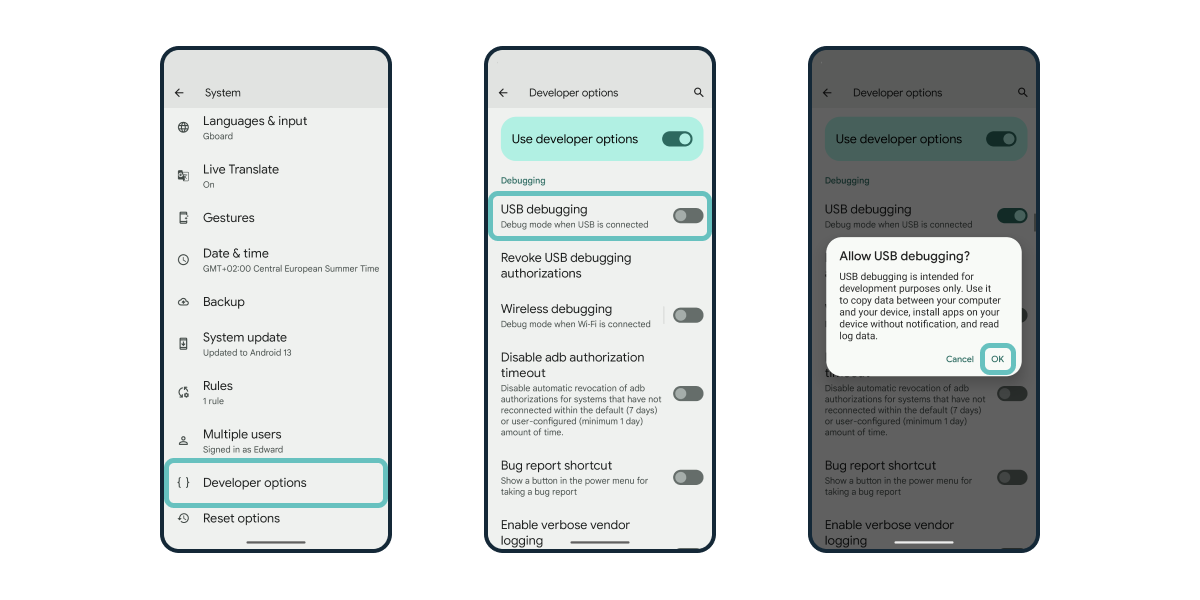
Tap Build number seven times, then return to Settings and open Developer Options. On many Android devices, the path is:
Settings → System → Developer Options
To enable USB debugging in Android Developer Options, find USB debugging under the Debugging section and switch it on. Google confirms that USB debugging must be enabled in Developer Options to use ADB with a device connected over USB.
When the phone connects to a new computer, Android normally displays a prompt asking whether to accept that computer's RSA key. The device must be unlocked and the connection approved before ADB commands are accepted.
Is USB Debugging Safe?
USB debugging is generally safe when it is used with trusted computers in a controlled environment. However, an authorized computer receives additional ways to communicate with the device, so debugging access should not be approved for unknown or public workstations.
Android uses RSA authorization for new debugging connections. On supported Android versions, the user must unlock the device and approve the computer before USB debugging and other ADB commands can be executed.
For controlled device testing, operators should authorize only trusted workstations, avoid unnecessary permanent authorizations, revoke previous debugging permissions when required, and disable USB debugging after use.
How to Disable USB Debugging
To turn off USB debugging, open:
Settings → Developer Options → USB debugging
Then switch the setting off.
If a device has previously authorized computers that should no longer have debugging access, their authorizations can also be revoked through Developer Options.
USB Debugging in Used Android Device Testing
For one phone, enabling USB debugging takes little time. The operational impact becomes more significant when a business handles dozens, hundreds, or thousands of Android devices.
Different Android manufacturers organize their settings differently. Operators may therefore spend additional time locating Developer Options, enabling debugging, approving connections, and preparing devices for diagnostics.
At scale, these repeated actions can affect processing time per device, consistency between operators, diagnostic throughput, and the number of devices processed during a shift.
NSYS Diagnostics helps reduce these manual steps through the Android Activation Booster. The activation process supports QR codes and NFC tags, including workflows for enabling USB debugging.
It can also prepare devices with the required Wi-Fi configuration and software used in the diagnostic workflow. This helps businesses move from device intake to testing with fewer repetitive setup steps.
USB debugging remains an important part of many Android diagnostic workflows. For high-volume operations, the practical goal is to make device preparation more consistent across Android models and operators.
FAQ
Should I leave USB debugging on?
USB debugging should generally be enabled when it is needed for development, diagnostics, or testing and disabled after use. This limits unnecessary debugging access to the device.
Does USB debugging allow file transfer?
Yes, ADB supports file transfer through the push and pull commands, which copy files and directories between a computer and an Android device. This is separate from the standard USB File Transfer mode available when connecting a phone to a computer.
Does USB debugging root an Android phone?
No. USB debugging enables communication through ADB but does not provide root access. Rooting is a separate process.
Does USB debugging delete data?
Simply enabling USB debugging does not erase device data. However, commands or software used through an authorized ADB connection can make changes to the device.