An iPhone can appear to work normally while still having problems with the display, battery, cameras, microphones, sensors, biometric authentication, connectivity, or replaced components.
For consumers, Apple’s built-in tools or a diagnostic app may be enough. Businesses processing used iPhones need something different: repeatable tests, device-level records, and consistent results across large inventories.
Quick Answer
The best iPhone diagnostic option depends on the use case. Apple Diagnostics is useful for troubleshooting supported devices, while consumer apps can test individual functions. Used-device businesses usually need professional software that combines functional testing, IMEI and status verification, parts information, reports, and standardized workflows.
Key Takeaways
- Apple provides built-in Diagnostics mode on supported recent iPhones.
- Consumer diagnostic apps can help test individual functions, but capabilities vary.
- Used iPhones should be checked for hardware condition, battery, biometrics, device status, and repair history.
- Businesses need repeatable testing and device-level records rather than isolated test results.
- Professional diagnostic software is better suited to high-volume resale, trade-in, refurbishment, and repair workflows.
Can You Run Diagnostics on an iPhone Without an App?
Yes. Apple provides Diagnostics mode through Recovery Assistant on supported devices. According to Apple, it is available on iPhone 14 models and later and can test functions such as the display, camera, and Face ID.
This is useful for troubleshooting and repair, but bulk used-device operations often need centralized results, IMEI or serial-number linkage, and data that can support grading, pricing, repair, or resale decisions.
What Can an iPhone Diagnostic App Test?
Capabilities vary by app and iOS permissions. Common tests may cover:
- touchscreen and display;
- cameras;
- microphones and speakers;
- vibration and buttons;
- Wi-Fi and Bluetooth;
- motion and proximity sensors;
- charging and battery information.
Some tests are automated, while others require user interaction. That can work well for one device, but consistency becomes more important when the same procedure is repeated across a large inventory.
What Should Be Tested on a Used iPhone?
A used iPhone should not be evaluated only by whether it powers on. Its resale value depends on functional, status, repair, and cosmetic factors.
A professional assessment may include:
- display and Multi-Touch;
- battery condition;
- front and rear cameras;
- microphones, speakers, buttons, and vibration;
- Face ID or Touch ID;
- Wi-Fi, Bluetooth, GPS, NFC, USB, and charging;
- sensors;
- IMEI, blacklist, carrier, financial, and management status;
- repair and parts history;
- cosmetic condition.
A phone can pass basic tests while still having a defect that changes its commercial value. For a used-device business, these are not only troubleshooting issues; they affect acquisition price, grading, repair, routing, and resale value.
Parts, Battery, and Biometric Checks
Apple provides Parts and Service History in Settings > General > About on supported devices. Depending on the model, it can show information about the battery, display, logic board, front camera, and rear cameras, with labels such as Genuine, Used, Unknown, or Unverified.
Battery testing is also essential because a phone can power on while having rapid drain, unexpected shutdowns, a high cycle count, or unreliable health information. These issues can change repair cost, resale grade, warranty risk, and purchase price.
Face ID and Touch ID should be tested separately. A device may otherwise appear functional while biometric authentication fails, and some incomplete or unverified repairs can affect biometric availability until calibration is completed.
Are Free iPhone Diagnostic Apps Enough?
For troubleshooting one phone or checking a specific sensor, speaker, microphone, or touchscreen, a consumer app may be sufficient. The limitation for businesses is usually workflow rather than a single test.
High-volume operations need to know whether the same tests were run on every device, which operator performed them, whether results are linked to an IMEI or serial number, and whether the records can later support repair, resale, pricing, or RMA decisions.
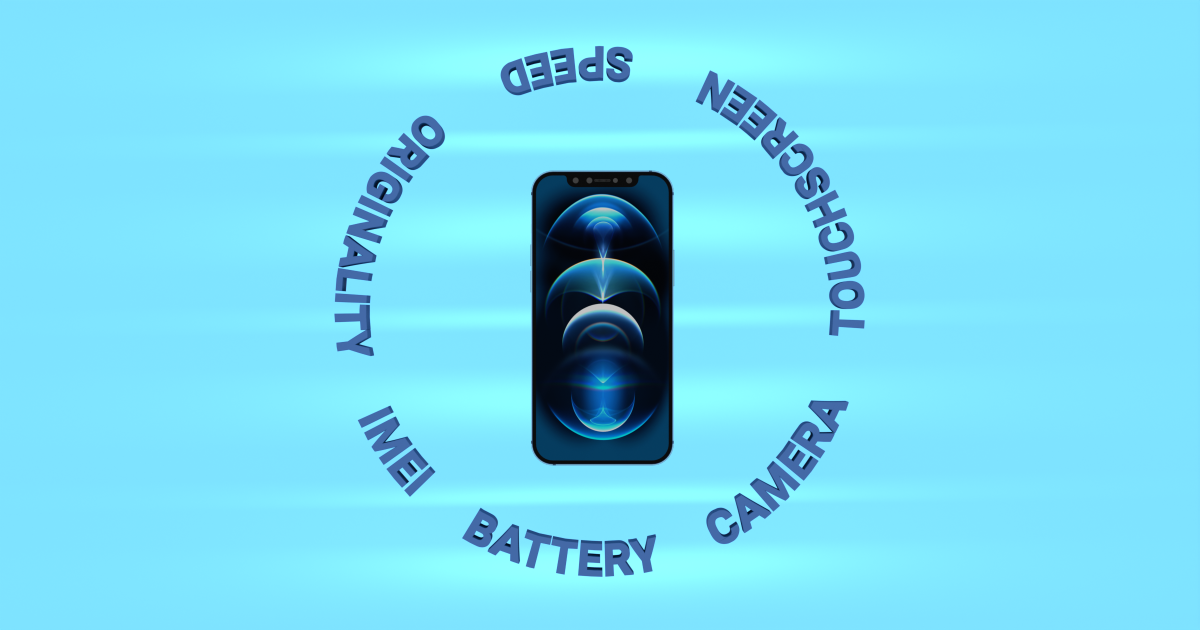
iPhone Diagnostic App vs. Apple Diagnostics vs. Professional Software
|
Capability |
Consumer diagnostic app |
Apple Diagnostics |
Professional B2B diagnostic software |
|
Troubleshoot one device |
Yes |
Yes |
Yes |
|
Functional hardware tests |
Varies |
Yes |
Yes |
|
Apple repair-focused diagnostics |
No |
Yes |
No |
|
IMEI and device-status verification |
Usually limited |
No |
Yes |
|
Parts information |
Limited |
Repair-focused |
Can be included |
|
Standardized operator workflow |
Limited |
Limited |
Yes |
|
Centralized device reports |
Usually limited |
Limited |
Yes |
|
Multiple-device processing |
Usually no |
No |
Yes |
|
Used-device resale workflow |
No |
No |
Yes |
|
Integration with grading, pricing, or inventory |
Usually no |
No |
Yes |
The tools solve different problems. Apple Diagnostics is focused on troubleshooting and repair. Consumer apps are useful for individual functional tests. Professional software is designed around repeatability, traceability, device-status checks, and operational decisions.
How Professional iPhone Diagnostic Software Supports Used-Device Businesses
For wholesalers, refurbishers, retailers, repair centers, ITAD companies, and buyback businesses, useful capabilities include:
- repeatable functional testing;
- automated and semi-automated tests;
- IMEI and device-status verification;
- component information;
- device-level test history and reports;
- simultaneous device processing;
- integration with grading, pricing, erasure, and inventory workflows.
The goal is not simply to identify defects. Diagnostic data should support the next business decision: repair, downgrade, reject, reprice, or move the device directly into resale inventory.
How NSYS Diagnostics Tests iPhones
NSYS Diagnostics is designed for businesses processing used and refurbished mobile devices. It includes more than 60 automated and semi-automated tests that can identify over 100 possible hardware defects.
For iOS devices, testing can cover the display and touchscreen, cameras, audio, buttons, sensors, connectivity, battery, Face ID and Touch ID, IMEI-related information, and device status.
NSYS Diagnostics also supports non-original parts detection for components including the display, battery, motherboard, and front and rear cameras. IMEI verification can include SimLock, MDM, financial status, and whether a device has been reported lost, stolen, or blocked.
Results can be linked to individual devices in reports, helping businesses document why a phone was downgraded, repaired, returned, or routed to another sales channel.
How Diagnostics Fit Into the Used iPhone Workflow
Diagnostics are one stage of a broader used-device process:
Intake → Identification → Diagnostics → Device-status verification → Cosmetic grading → Data erasure → Pricing → Inventory → Resale
Each stage answers a different question. Diagnostics confirm functionality, status checks identify commercial or security restrictions, grading assesses appearance, data erasure prepares the device for another owner, and pricing converts condition data into a commercial decision.
How to Choose the Best iPhone Diagnostic Software
The best solution depends on the models, volume, and decisions made from test results. Evaluate these factors:
Supported iPhone Models
Confirm support for the older and current iPhone models handled by the business.
Range of Tests
Check whether the software covers the functions that most often affect resale value.
Automation
Balance automated testing with manual interaction where subjective checks are necessary.
Device Status and Parts
Include IMEI, carrier, MDM, financial status, and repair or replacement information where supported.
Reports and Traceability
Keep test results linked to an identifiable device and accessible later.
High-Volume Workflow
Look for multiple-device processing and integration with grading, erasure, pricing, inventory, and reporting.
Frequently Asked Questions
Does the iPhone have a built-in diagnostic tool?
Yes. Apple provides Diagnostics mode on iPhone 14 models and later through Recovery Assistant, including tests for functions such as the display, camera, and Face ID.
What is the best iPhone diagnostic app?
There is no single best option. Apple Diagnostics is suitable for troubleshooting supported devices, consumer apps can handle individual tests, and professional software is better suited to businesses processing used iPhones at scale.
Can an iPhone diagnostic app detect hardware problems?
Yes. Depending on the tool, diagnostics can identify issues involving the display, audio, cameras, sensors, connectivity, battery, and other functions.
Can you check whether iPhone parts have been replaced?
Yes. Apple provides Parts and Service History on supported devices, and professional diagnostic tools may also provide component information.
What diagnostic software is suitable for used iPhone businesses?
Look for standardized functional testing, device-status verification, parts information, device-level reports, and support for high-volume workflows.
The Best Diagnostic Tool Depends on the Job
Apple Diagnostics, consumer apps, and professional software serve different purposes. Apple’s tool supports troubleshooting and repair, while consumer apps can help with individual devices. Professional software becomes more important when testing is part of a repeatable business process involving large volumes of used iPhones.
For used-device businesses, the objective is to create reliable information that supports decisions to buy, repair, grade, price, return, or resell each device. NSYS Diagnostics supports this process with standardized testing, device-status verification, parts information, and device-level reports.