Starting a phone repair business requires more than technical repair skills. Profitability depends on choosing the right services, sourcing reliable parts, setting prices around real costs, and building a repeatable workflow that documents device condition before and after repair.
Quick Answer
Start with a focused range of devices and repairs, estimate real operating costs, choose reliable suppliers and tools, and standardize intake, diagnostics, repair, retesting, payment, and warranty procedures. Clear pricing, customer-data rules, and quality control are essential from the beginning.
Key Takeaways
- Start with a limited service range and expand based on demand and repair data.
- Calculate profit using parts, labor, overhead, failed repairs, and warranty costs.
- Test devices before repair and retest them before return or resale.
- Parts quality directly affects repair success and warranty rates.
- Use consistent intake, pricing, data-handling, and warranty procedures.

Choose a Business Model and Service Range
Common models include walk-in repair, mail-in service, mobile repair, B2B repair centers, and repair combined with refurbishment or trade-in. A new business should establish one model before adding extra revenue streams.
The same applies to services. Screen and battery replacement are easier to standardize than board-level repair, which requires advanced diagnostics, microsoldering skills, and additional equipment. Supporting a narrower set of popular models also reduces training and parts-inventory costs.
Understand Repair Economics
Revenue per repair is not the same as profit. A useful model is:
Customer price − Parts − Labor − Consumables − Warranty cost − Overhead = Gross profit
Track profit by repair type rather than relying only on ticket value. A lower-priced repair completed quickly can generate better hourly profit than a complex job with expensive parts and a high warranty risk.

Tools and Equipment
Basic professional workstations typically need precision screwdrivers, opening tools, tweezers, ESD protection, controlled heat, clamps, adhesives, and cleaning materials. Advanced work may require a multimeter, DC power supply, microscope, soldering station, and hot-air rework equipment.
Diagnostic tools are equally important because they help determine what actually needs repair and verify the result afterward. The workspace should also include safe procedures for lithium-ion batteries and damaged devices.
Build a Consistent Repair Workflow
Customer intake → Device identification → Diagnostics → Quote approval → Repair → Post-repair testing → Payment → Warranty record
At intake, record the model, IMEI or serial number, reported problem, visible damage, current functional condition, accessories, account or activation status where relevant, and estimated price. Photos can help document existing physical damage.
Why Diagnostics Before and After Repair Matter
A reported problem may not be the only defect. Pre-repair testing can identify issues with cameras, batteries, microphones, charging, biometrics, sensors, or connectivity before disassembly. This improves quoting and creates a record of the device’s initial condition.
After repair, the phone should be tested again. A screen or battery replacement can affect nearby cables, sensors, cameras, speakers, biometric components, or connectors. Post-repair testing should therefore verify the main device functions, not only the replaced part.
Source Parts Carefully
Replacement parts may include genuine manufacturer parts, pulled or refurbished originals, and aftermarket components. Supplier terminology is not always consistent, so businesses should define exactly what they are purchasing.
Evaluate suppliers by defect rate, compatibility, warranty terms, return process, availability, delivery speed, and consistency between batches. The lowest-priced part is not always the cheapest option once repeat labor and warranty repairs are included.
Pricing, Warranty, and Customer Data
Set prices around real cost rather than copying competitors. A practical model is:
Part cost + Labor + Consumables + Overhead + Warranty risk + Target margin
Warranty terms should be defined before opening, including the warranty period, covered parts and labor, exclusions, new physical or liquid damage, and repeated failures. Warranty jobs should be tracked separately to identify recurring supplier or repair-quality problems.
Because phones may contain personal data, the business also needs clear rules for passcodes, backups, device access, account locks, storage, and resets. Employees should not bypass legitimate anti-theft protections; ownership and access requirements should be handled during intake.
How to Start a Phone Repair Business Step by Step
1. Define the model and services. Choose the customer type, device families, and repairs you will support.
2. Research demand. Review local demand, common models, pricing, competitor reviews, and service gaps.
3. Set up the business. Register the company and confirm local rules for repair, batteries, waste, customer data, tax, and insurance.
4. Select suppliers and equipment. Test parts suppliers and choose repair and diagnostic tools appropriate for the services offered.
5. Build the workflow. Standardize intake, diagnostics, quoting, repair, retesting, payment, and warranty handling.
6. Track performance. Measure repair time, parts cost, warranty claims, failed repairs, and profit by service.
7. Acquire customers. Use channels suited to the model, from local search and reviews to B2B partnerships and service agreements.
When to Add Trade-In or Resale
Trade-in, refurbishment, and resale can become logical extensions once the core repair workflow is stable. They introduce additional requirements around pricing, activation locks, blacklist checks, data erasure, grading, inventory, and resale, so they should not distract from establishing reliable repair operations first.
How NSYS Diagnostics Supports Repair Businesses
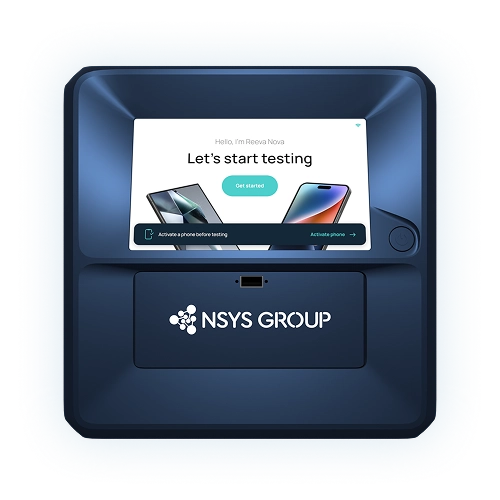
NSYS Diagnostics is designed for businesses processing used and repaired mobile devices. It supports more than 60 automated and semi-automated tests and can identify over 100 possible hardware defects.
The software can be used before repair to document initial device condition and after repair to confirm that key functions operate correctly. Tests can cover display and touchscreen, cameras, audio, buttons, sensors, battery, charging, connectivity, Face ID, and Touch ID. Results can be linked to individual devices and retained in reports for quality control and dispute handling.

Frequently Asked Questions
How much does it cost to start a phone repair business?
Startup costs vary by location, business model, service range, tools, initial parts inventory, staffing, insurance, and rent. A small mail-in or home-based operation can cost far less than a retail shop or B2B repair center.
What repairs are best for a new business?
Common screen and battery repairs are easier to standardize than advanced board-level work. The best starting services depend on technician skills, local demand, parts availability, and expected margins.
Should every phone be tested before and after repair?
A standardized pre- and post-repair test helps document existing defects, verify the repair, and identify problems before the device is returned to the customer or moved into resale inventory.
Build the Process Before Scaling
Technical repair skills are essential, but a reliable repair business also needs consistent intake, diagnostics, parts sourcing, pricing, data procedures, quality control, retesting, and warranty handling. Once those processes are stable, the business can expand into more device models, B2B work, trade-in, refurbishment, or resale.