A warehouse may have hundreds of smartphones in stock and still struggle to fulfill an order. The device might be physically available but listed under the wrong grade, IMEI, or storage location.
For used phone businesses, these small mistakes lead to delayed shipments, returns, and inaccurate stock records.
Quick Answer
Human error creates inventory problems through incorrect data entry, inconsistent grading, and missed stock updates. Warehouse inventory software reduces these risks by centralizing device records, automating updates, and supporting barcode inventory tracking throughout the warehouse workflow.
Why Inventory Accuracy Matters in Used Phone Warehouses
Unlike new products, used smartphones are not interchangeable. Two phones of the same model may differ in battery health, cosmetic condition, or carrier status.
Accurate inventory records help warehouses identify the right device, confirm its condition, and fulfill orders correctly.
Poor inventory accuracy can result in:
- Incorrect stock availability and missing devices.
- Shipping the wrong model or grade.
- Unnecessary returns and customer complaints.
- Time wasted investigating inventory discrepancies.
- Inaccurate stock valuations.
Where Human Error Happens in the Inventory Process
Mistakes can occur at almost every stage of device processing.
Receiving and Intake
Manual registration may result in duplicate records, missing devices, or incorrect specifications, particularly when processing large shipments.
Device Grading
Inconsistent assessments or incorrect data entry can cause phones to be stored and sold under the wrong condition grade.
IMEI or Serial Number Entry
A mistyped IMEI can disconnect a device from its diagnostic results, transaction history, or inventory record.
Picking and Packing
Employees may accidentally select phones with the wrong storage capacity, grade, or carrier status, even when the models look identical.
Returns and Stock Adjustments
If returned or defective phones are not correctly registered, they may appear available for resale.
Why Used Phones Are Harder to Track
Conventional warehouses often track products by SKU. Used phone warehouses also need records for individual devices.
Important information includes:
- Unique IMEI and serial numbers.
- Model, storage capacity, and color.
- Cosmetic and functional grades.
- Battery condition and diagnostic results.
- Carrier restrictions and lock status.
- Warehouse location and availability.
An inventory management solution must distinguish devices that share the same specifications but have different conditions and resale values.
How Barcode Inventory Tracking Reduces Errors
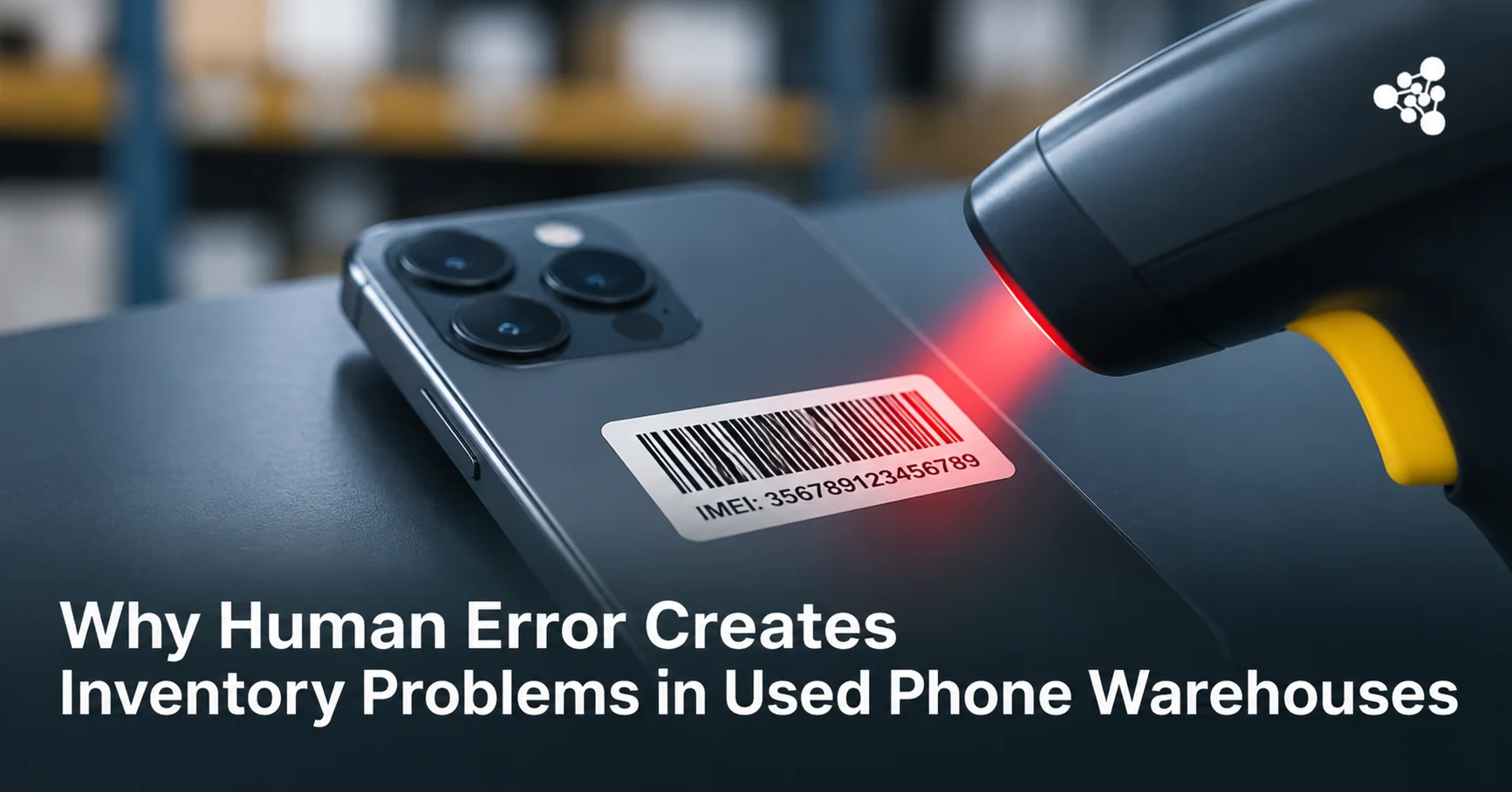
Barcode inventory tracking connects each physical device to its digital record.
Instead of manually entering identifying information, employees scan a barcode during receiving, testing, storage, picking, and shipping.
This approach reduces transcription errors, simplifies device identification, and helps maintain accurate stock locations.
However, barcodes work best when connected to a centralized inventory system with reliable record updates and verification procedures.
How Warehouse Inventory Software Improves Inventory Accuracy
Warehouse inventory software organizes device information in one system, reducing dependence on spreadsheets and repeated manual entry.
Useful capabilities include:
- Individual device tracking by IMEI or serial number.
- Centralized records of device condition and availability.
- Status updates throughout processing.
- Inventory history for investigating discrepancies.
- Integration with diagnostic tools and other business systems.
For example, a phone that fails diagnostics should not remain listed as ready for sale.
NSYS Inventory helps used-device businesses centralize inventory tracking and organize device information throughout processing and resale.
Connecting inventory management with device workflows helps businesses maintain more consistent records and reduce administrative work.
When to Use a Warehouse Automation System
A warehouse automation system becomes valuable when manual processes start limiting operational efficiency.
Typical warning signs include frequent inventory corrections, increasing processing volumes, repeated picking mistakes, and disconnected testing and inventory records.
Automation does not always require robotics. Barcode scanning, automatic status updates, and centralized software can already reduce repetitive work.
What to Look for in an Inventory Management Solution
For used phone businesses, an effective inventory management solution should offer:
- Serialized inventory tracking.
- Barcode scanning support.
- Device grading and condition records.
- Inventory status and location management.
- Integration with diagnostics and other systems.
- Transaction history and data export.
The system should also help detect duplicate records and prevent devices with incorrect statuses from entering the shipping process.
Frequently Asked Questions
What causes inventory inaccuracies in warehouses?
Manual data entry, incorrect stock counts, misplaced devices, inconsistent grading, and delayed record updates are common causes.
How can warehouses improve inventory accuracy?
Use barcode scanning, centralized inventory records, standardized workflows, and regular stock reconciliation.
Can warehouse automation eliminate inventory mistakes?
No. Automation reduces manual errors, but incorrect labels, incomplete records, and system configuration issues can still cause discrepancies.
What inventory management solution works best for serialized devices?
Software that supports IMEI tracking, device condition records, barcode scanning, and integration with diagnostic workflows is particularly suitable for used phone businesses.
Reduce Inventory Errors with Better Tracking
Most warehouse inventory problems begin with small manual mistakes that accumulate throughout processing.
Centralized records, barcode verification, and consistent device tracking help businesses reduce these errors and maintain more reliable stock information.
Explore NSYS Inventory to learn how structured inventory management can support your used-device operations.