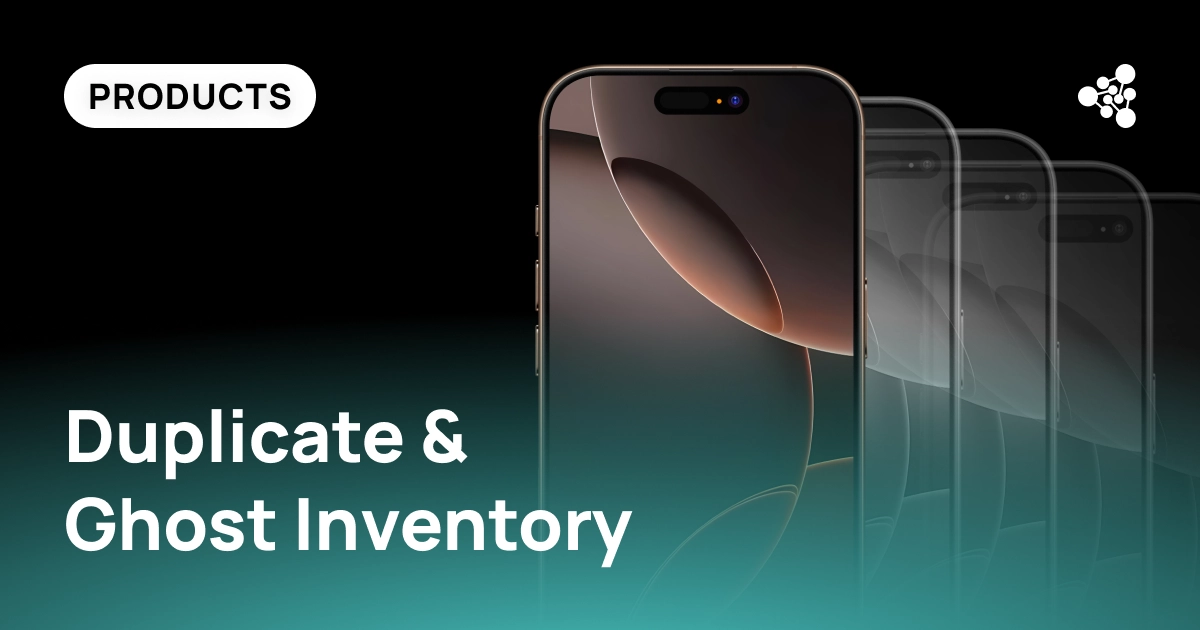
Inventory accuracy gets harder to maintain as used devices move through intake, diagnostics, grading, repair, storage, sales, and returns. A phone can be entered twice, remain "available" after it's already sold, or land in the wrong warehouse. For businesses processing hundreds or thousands of devices, keeping every device tied to one accurate record is essential for reliable stock data and efficient warehouse operations.
Key Takeaways
- Phantom inventory is stock the system shows as available that isn't physically there. Duplicate inventory is one device with multiple records.
- Both trace back to the same root cause — inconsistent device identity — so IMEI-based tracking fixes both at once.
- Movement controls, user accountability, and regular counts catch discrepancies early.
- NSYS Inventory combines IMEI tracking, warehouse management, diagnostics data, and RMA workflows in one system.
The Short Version
The most reliable fix is one record per physical device, updated whenever its status or location changes. For mobile devices, the IMEI is a practical unique identifier that follows a phone from intake through processing, storage, sale, and return — since it never changes, it naturally prevents both duplicate records and stale "available" statuses.
What Causes Duplicate or Phantom Inventory
Phantom (or "ghost") inventory shows up wherever a device record changes without the system catching up:
- Intake: an IMEI is mistyped or the same device gets imported twice.
- Processing: a phone moves to diagnostics or repair, but its status stays "available."
- Transfers: a device physically moves between warehouses, but its digital location doesn't.
- Sales: a sold device stays marked as in stock.
- Returns: a returned phone gets logged as a new device instead of being linked to its history.
- Disconnected systems: inventory, diagnostics, sales, and RMA data live in separate tools that are hard to reconcile.
|
Problem |
System records |
Physical reality |
|
Duplicate inventory |
Two records, same IMEI |
One device |
|
Phantom inventory |
Marked as available |
Unavailable or can't be found |
|
Missing inventory |
No active record |
Device exists |
The more often a device changes hands or status, the more chances a record has to drift from reality — and the effects compound: sales teams promise phones that can't be found, purchasing orders stock that isn't actually low, and staff burn time chasing down discrepancies instead of processing new inventory.
How to Prevent It: One Identity, Tracked Through the Whole Lifecycle
The fix for both problems is the same: give every device one persistent identity and keep that single record updated through its entire path —
Supplier → Intake → Diagnostics → Grading/Repair → Warehouse → Transfer → Sale → Return/RMA
A device shouldn't get a new inventory identity just because it enters a new stage. For phones, the IMEI is what makes this practical: one IMEI, one record, updated at each step. NSYS Inventory tracks devices this way from supplier intake through sale, across multiple warehouses.
Returns need particular care — if a sold phone comes back, it should reconnect to its existing record rather than spawn a new one. NSYS Inventory's built-in RMA functionality handles this, linking returns back to device history instead of creating orphan entries.
Beyond IMEI tracking, a few controls matter most:
- Movement tracking — log transfers and status changes as they happen, not after the fact.
- User accountability — make every change traceable to who made it.
- Connected data — keep inventory alongside diagnostics and ESN checks instead of in separate systems.
- Exception-based review — you don't need to audit every device daily; focus on duplicate IMEIs, long-stale records, repeated manual adjustments, and gaps found during cycle counts.
NSYS Inventory is built around these controls specifically for the used-device industry — IMEI tracking, multi-warehouse management, movement orders, user permissions, and integration with NSYS Diagnostics and ESN checks — so a device's record stays in sync as it moves, instead of drifting apart across disconnected tools.
FAQ
What is phantom inventory?
Stock the system shows as available that isn't physically there — usually from outdated records, unrecorded movements, or mishandled returns.
How is it different from duplicate inventory?
Phantom inventory is one record with the wrong status; duplicate inventory is two records for the same device. Both are fixed the same way — one persistent IMEI-based identity per device.
Can IMEI tracking really prevent duplicates?
Yes — using the IMEI as a consistent identifier makes it straightforward to keep one record per phone and spot inconsistencies before they pile up.
Conclusion
Accurate inventory comes down to keeping the digital record aligned with the physical device at every stage. For used mobile devices, that means one consistent identity, tracked movements, correctly handled returns, and exceptions caught early. With IMEI-based tracking and centralized data, NSYS Inventory gives refurbishers, wholesalers, and retailers the tools to keep device records accurate as stock moves through the warehouse.