In 2026, refurbished phones are no longer a niche segment of the electronics industry. They have become a mainstream category, increasingly treated as a standard alternative to new devices rather than a budget compromise.
This shift is not happening by chance. It is the result of a structural transformation in the electronics market, driven by three major forces: rising device prices, growing demand for sustainable electronics, and, most importantly, the industrialization of quality control through automation and data.
The key change is simple but fundamental: refurbished devices are no longer evaluated by opinion — they are evaluated by systems.
A market shifting from perception to verification
Historically, the refurbished electronics market was fragmented. Device condition often depended on who inspected it, how strict internal standards were, or even the workload of individual technicians. This led to inconsistent grading, unclear expectations, and limited trust at scale.
As the market expanded, this model stopped being sustainable.
Today, the industry is moving toward a different paradigm — where condition is verified through repeatable diagnostics, standardized grading logic, and automated inspection workflows.
This transition is essential for platforms such as Back Market, refurbed, Amazon Renewed, Ebay Refurbished, and other global resale ecosystems, which are increasingly enforcing strict certification and transparency requirements across their seller networks.
Automation is not the upgrade — it is the foundation
Artificial intelligence and automation are often described as improvements in refurbishment. In reality, they are becoming the baseline infrastructure of the industry.
However, the most important shift is not the software itself — it is the integration of diagnostics, grading, inventory and pricing into a single, unified process.
This is where NSYS’ approach stands apart.
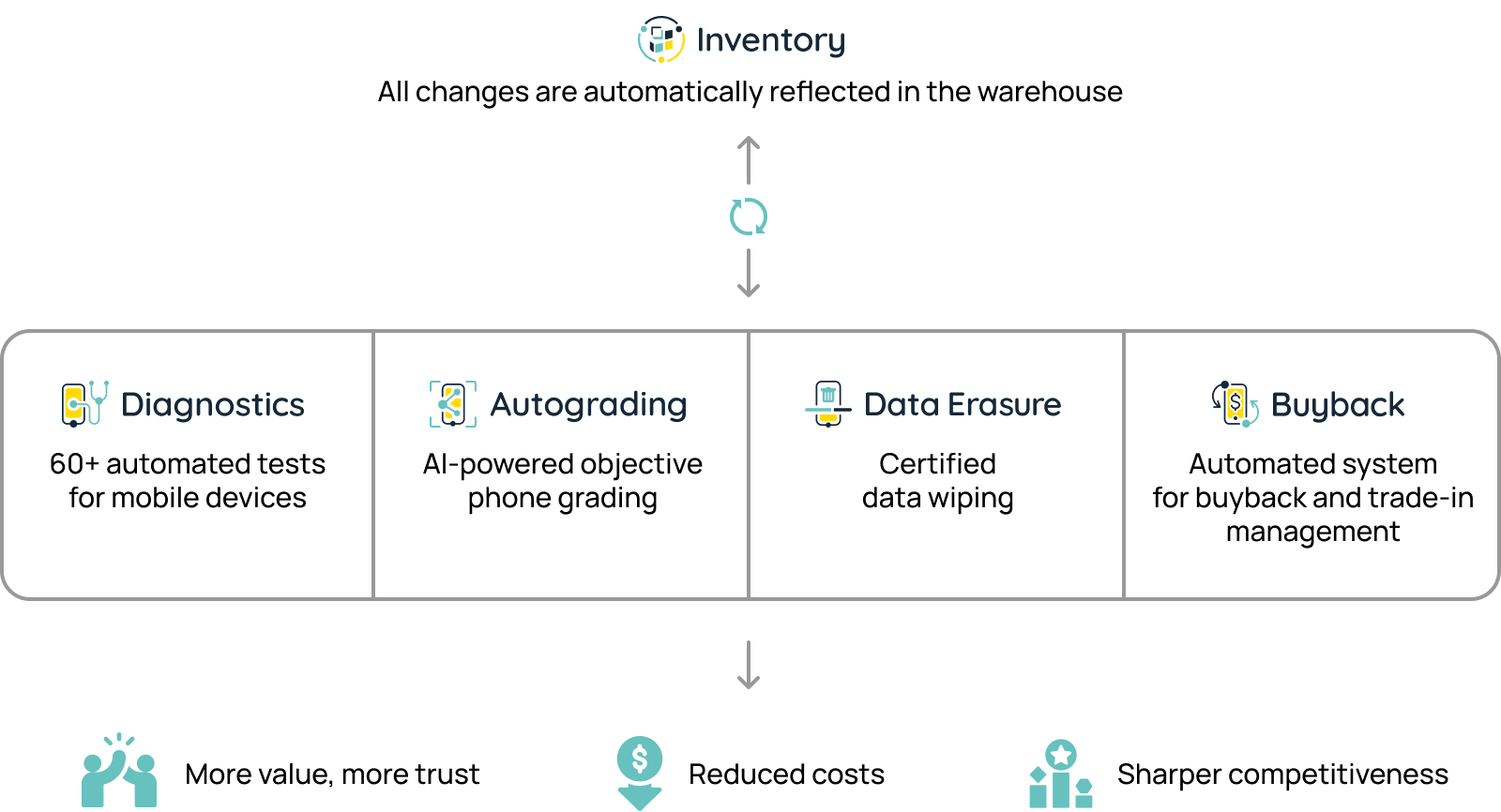
NSYS All-in-One: a unified ecosystem for verified refurbishment
The NSYS All-in-One ecosystem connects diagnostics, cosmetic inspection, data wiping, grading, inventory management, and condition-based pricing into one coherent workflow. Instead of relying on separate tools and subjective technician judgement, every stage uses a shared data model and a single logic of evaluation.
Diagnostics and cosmetic inspection feed grading, grading informs pricing, inventory updates automatically, and every action generates a verifiable audit trail. This removes inconsistencies typical of fragmented processes and creates a transparent quality layer trusted by high-standard marketplaces.
But software standardization is only the foundation.
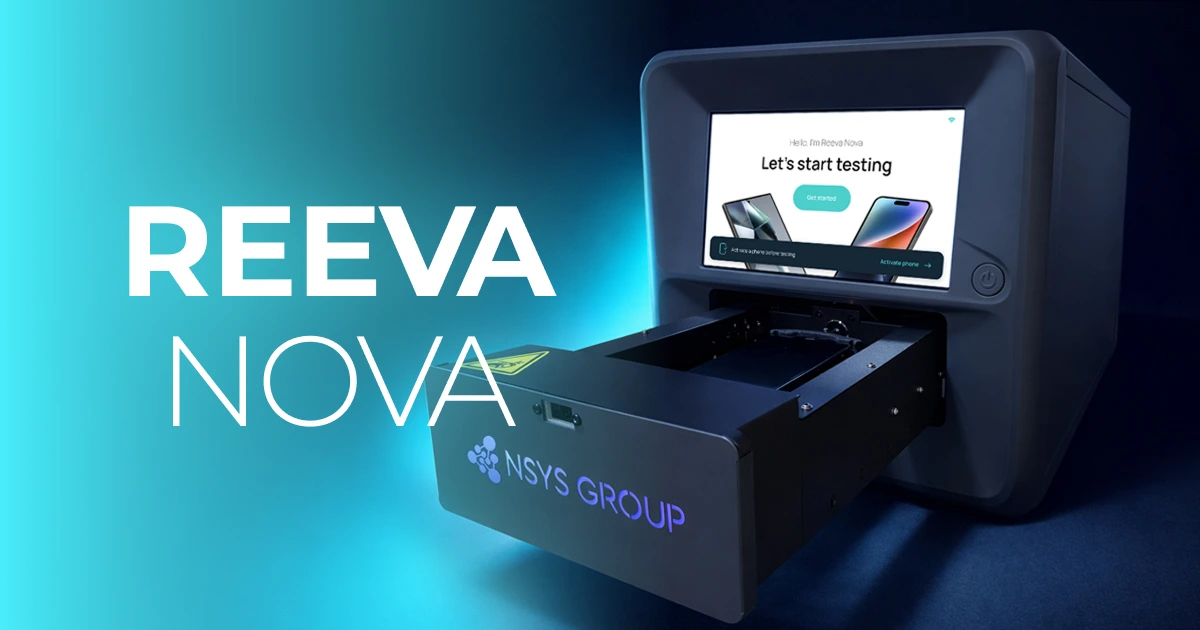
Reeva Nova: where the ecosystem becomes industrial
Reeva Nova takes the entire NSYS ecosystem and executes it in a fully automated physical environment. The robot applies the same diagnostics, grading logic, and inventory workflows — but does so with machine-level precision and without human variability.
Every device is tested, inspected, and classified under identical conditions. Cosmetic checks use consistent lighting and AI vision. Functional tests run with perfect repeatability. Reports are generated automatically and traceably, ready to meet strict certification requirements.
In other words, Reeva Nova turns the All-in-One ecosystem from a digital standard into an industrial process — enabling high-volume operations, marketplace compliance, and trust at scale.
Why certification is now a market requirement
As refurbished phones enter the mainstream, certification is no longer optional. It is becoming a baseline expectation.
Marketplaces are now focused on one critical question:
Can device condition be proven, not just described?
The answer depends on diagnostics.
Robotic and automated systems enable the creation of structured, traceable, counterfeit-proof reports that support certification frameworks used across the industry.
This is especially important in ecosystems built around strict quality control standards, where sellers must demonstrate consistency across thousands of devices.
NSYS technology is used by partners operating within such high-standard environments, where reliable diagnostics and grading directly influence marketplace approval and customer trust.
Why refurbished phones are becoming mainstream
The growth of refurbished phones in 2026 is not driven by pricing alone.
It is driven by trust becoming measurable.
Consumers now expect:
- predictable device quality
- transparent condition reporting
- consistent grading across sellers
- warranty-backed assurance
- secure handling and verified diagnostics
At the same time, sustainability has moved from a secondary argument to a structural market driver. Refurbished electronics are now central to circular economy strategies across both consumer and enterprise segments.
But sustainability only scales when trust is embedded into the system itself.
That is exactly what automation and robotics are enabling today.
Conclusion: industrialization of refurbishment
The refurbished electronics market is undergoing industrialization. Manual inspection is being replaced by automated systems. Subjective grading is being replaced by data-driven evaluation. And fragmented pricing models are being replaced by condition-based intelligence.
In this environment, robotics plays a central role — not as an enhancement, but as the infrastructure that makes scale possible.
Refurbished phones are becoming mainstream because the industry has finally solved its core limitation: trust at scale through verification, not assumption.
To explore how diagnostics, grading, and data erasure are shaping trust in refurbished IT, join NSYS team at Retech Days Europe