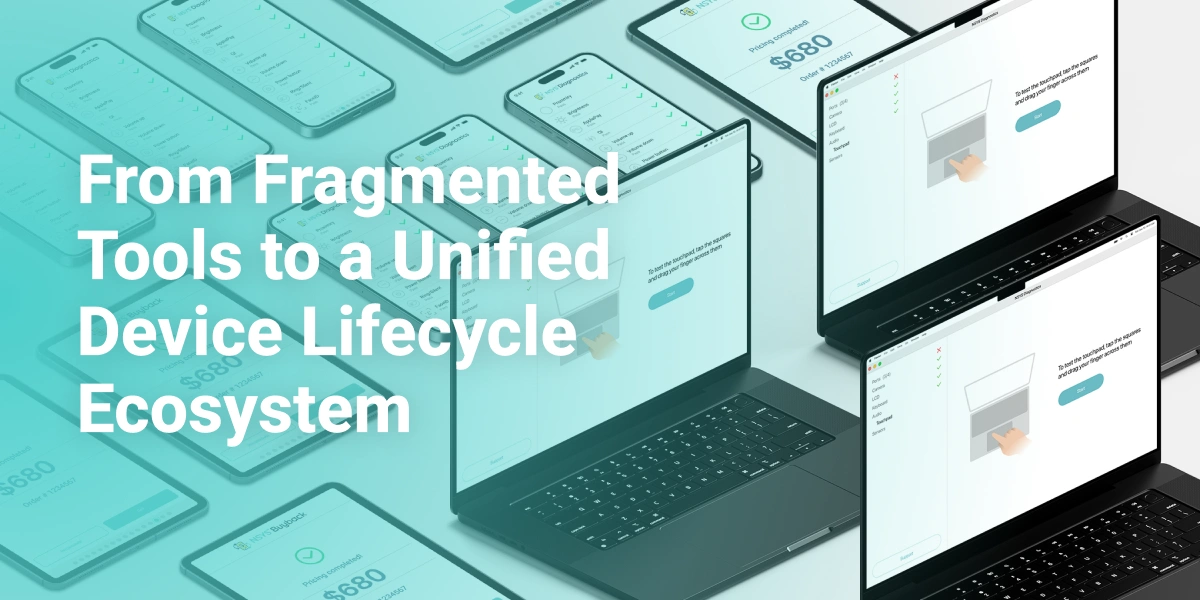
Device Lifecycle Management (DLM) has long evolved beyond a simple set of sequential tasks. As buyback and refurbishment businesses scale, the lifecycle of a mobile device—from intake to testing, data erasure, grading, warehousing, resale and reporting—becomes a complex, multi-stage ecosystem. The challenge in 2026 is no longer the lack of tools. It is the lack of connection between them.
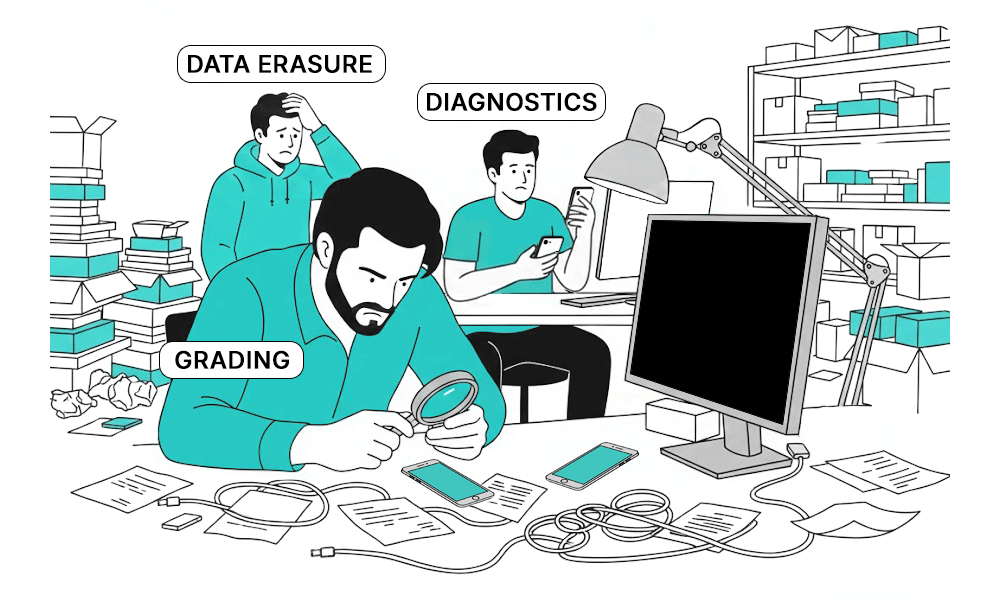
Many companies operate through fragmented workflows: diagnostics in one system, data erasure in another, warehouse tracking somewhere else. These systems “talk” poorly to each other, creating silos that directly limit scalability. The result is predictable: more manual work, inconsistent records and gaps in audit trails that can’t meet enterprise expectations.
Why Disconnected Systems Don’t Scale
As volumes grow, fragmentation becomes a bottleneck.
Data lives in multiple places with no single source of truth. Operators manually transfer results from diagnostics to grading or from erasure to inventory updates. Errors accumulate, records drift and full traceability becomes almost impossible during audits. In large-scale operations, this means not just slower processes—but a loss of control over assets.
Key Risks of Non-Integrated Workflows
For buyback and refurbishment companies, the absence of integration leads to misalignment between stages, higher operational costs and reliance on manual data handling. Internal and external audits become painful, and compliance becomes harder to demonstrate.
Enterprise clients face even more critical issues: missing audit trails, uncertainty about data erasure accuracy and limited transparency across the lifecycle. When devices are processed across disconnected systems, trust inevitably decreases.
How Integration Transforms Device Lifecycle Management
A unified ecosystem turns DLM into a controlled, end-to-end workflow where every stage is connected. Integration enables consistent data flow, automated status updates and a complete device story—from acquisition to resale.
With integration, businesses gain:
- A unified data stream.
- Automated handoffs between processes.
- Full device history and auditability.
- Clear transparency for internal teams and enterprise customers.
This shift is not merely operational—it becomes a strategic advantage in high-volume environments.
What Exactly Needs to Be Integrated
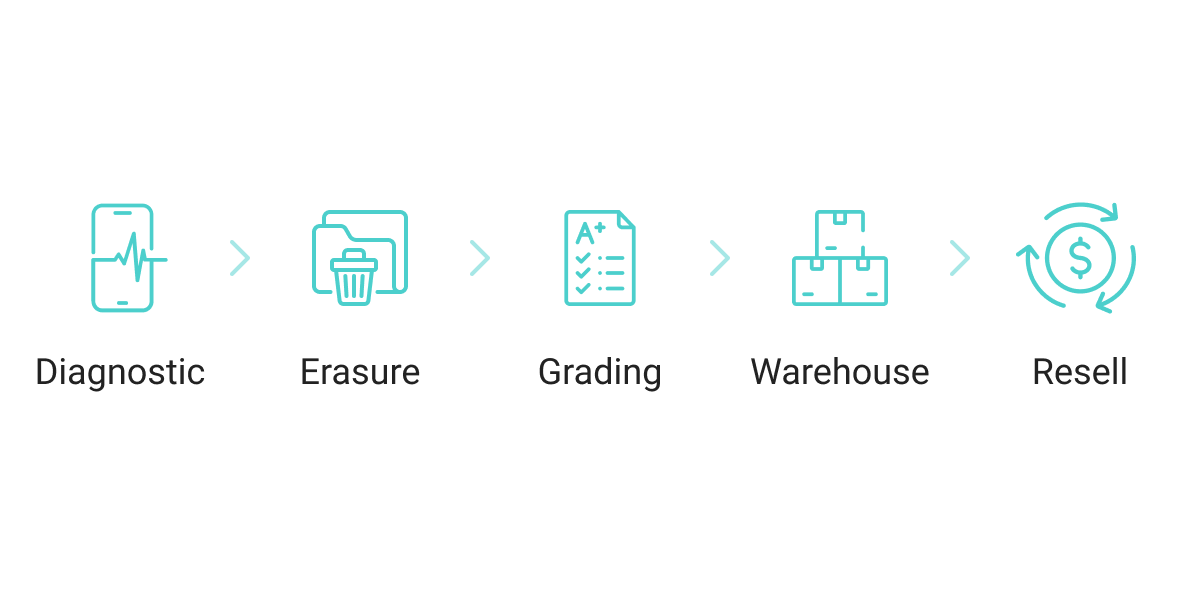
The backbone of enterprise device lifecycle management software is synchronised data across core processes:
Diagnostics
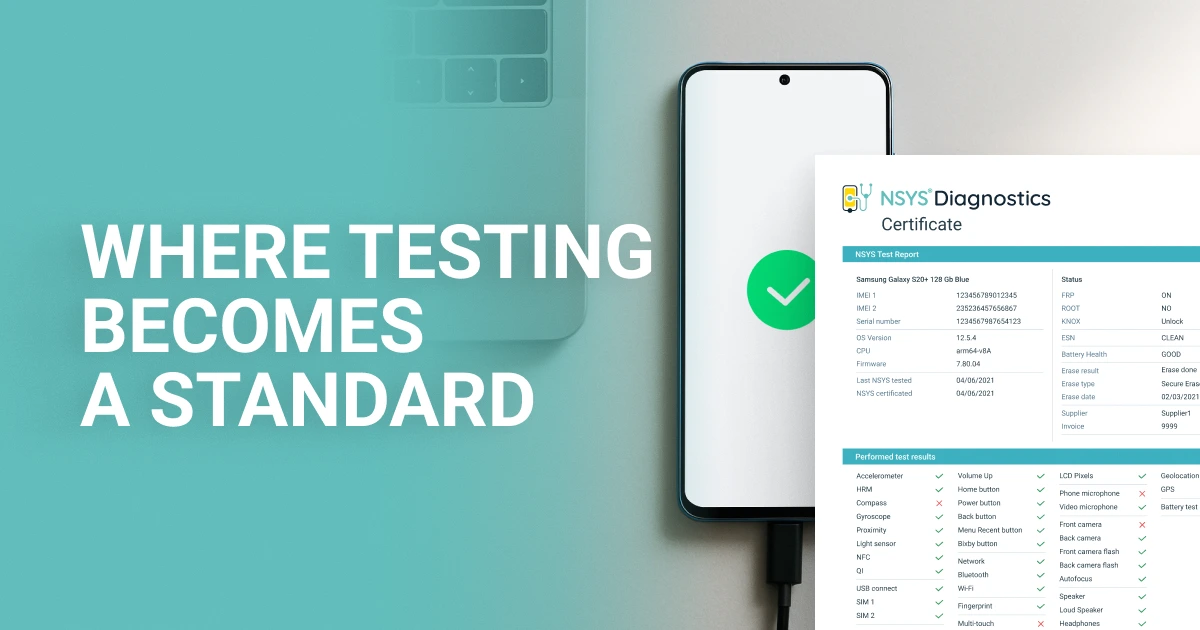
Testing results automatically flow into grading, erasure and reporting without manual intervention.
Data Erasure & Compliance
Every erasure record is tied to a specific device ID, forming a validated audit trail aligned with GDPR, ADISA and NIST 800-88.
Grading & Condition Assessment
Grading decisions rely on diagnostic data, ensuring consistent evaluation across all locations.
Warehouse & Logistics
Inventory updates and device statuses change automatically, eliminating duplicated actions.
When these functions operate as a single system, DLM becomes predictable, scalable and significantly more cost-efficient.
Why Integration Directly Affects Profitability
Non-integrated workflows generate hidden losses: repetitive actions, manual re-entry, slow resale cycles and disputes caused by inconsistent data. Time-to-market increases, margins shrink and the overall risk profile grows.
With an integrated ecosystem, businesses accelerate throughput, reduce OPEX and achieve predictable margins. Faster and more transparent processes also strengthen enterprise partnerships—an increasingly decisive factor in global device lifecycle operations.
How NSYS Solves the Integration Gap
NSYS Diagnostics
A unified entry point for device condition data, automatically distributed across the ecosystem.
NSYS Data Erasure
Secure erasure tied to device lifecycle records, complete with compliance certifications and a verifiable audit trail.
NSYS Autograding
Objective, data-driven grading with standardized rules for all sites and teams.
NSYS Inventory
Real-time inventory tracking with automated status updates, synchronized across all locations and lifecycle stages.
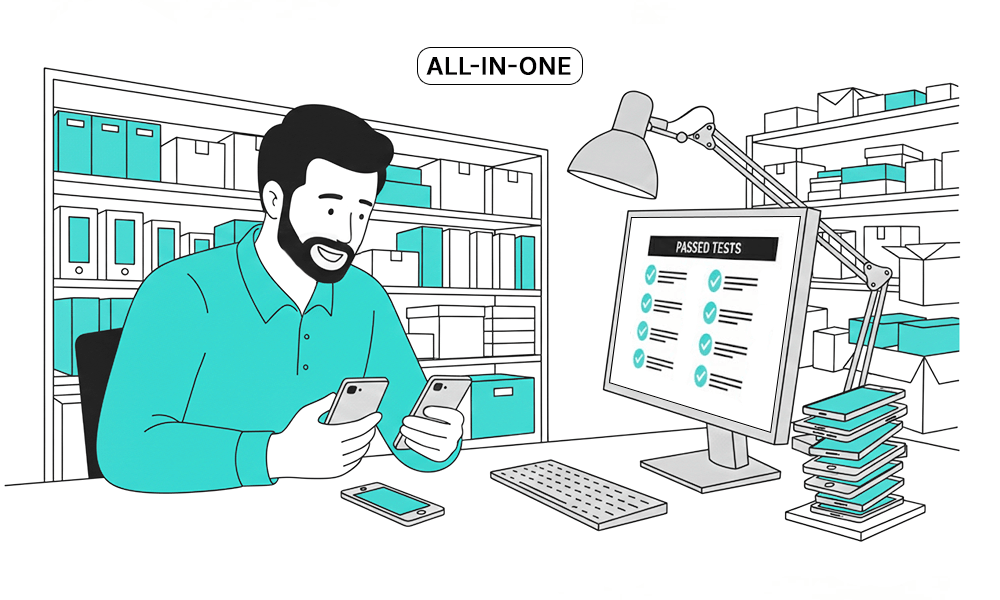
NSYS All-in-One Ecosystem
A connected platform where diagnostics, erasure, grading, warehouse data and reporting work together.
API integration with ERP, WMS and CRM systems ensures scalability without losing control.
The Value in One View
Without integration:
fragmented tools → missing data → manual errors → audit risks → reduced profitability
With NSYS:
integrated ecosystem → transparency → control → customer trust → sustainable growth
Conclusion: Integration as the Foundation of Scalable DLM
In large-scale device lifecycle management, success is not determined by the number of tools a company uses, but by how well these tools work together. Integration delivers data accuracy, regulatory compliance and operational clarity—critical factors for scaling in a competitive global market.
NSYS enables companies to build a fully integrated DLM ecosystem designed for high-volume, enterprise-grade operations.
Request an NSYS demo to see how integration can transform your device lifecycle workflows.